Feeling overwhelmed by money management? Girl, you’re absolutely not alone! Today, I’m sharing the budgeting method that completely transformed my financial life – and I just know it’s going to help you too!
If you’ve ever Googled “how to budget money” at 2 AM while stress-eating ice cream, welcome to the club! I’ve been exactly where you are – confused, overwhelmed, and wondering why managing money feels so impossibly complicated.
But here’s the beautiful truth I discovered: it doesn’t have to be that hard. The 50/30/20 budget rule changed everything for me, and as someone who tried literally every budgeting method out there, I can honestly say this one finally clicked.
Whether you’re completely new to budgeting for beginners or you’ve tried other approaches that just didn’t stick, this guide is for you. So grab your favorite cup of tea, get comfortable, and let’s talk about how to take control of your finances once and for all!
Table of Contents
What Is the 50/30/20 Budget Rule? Understanding the Budget Percentages
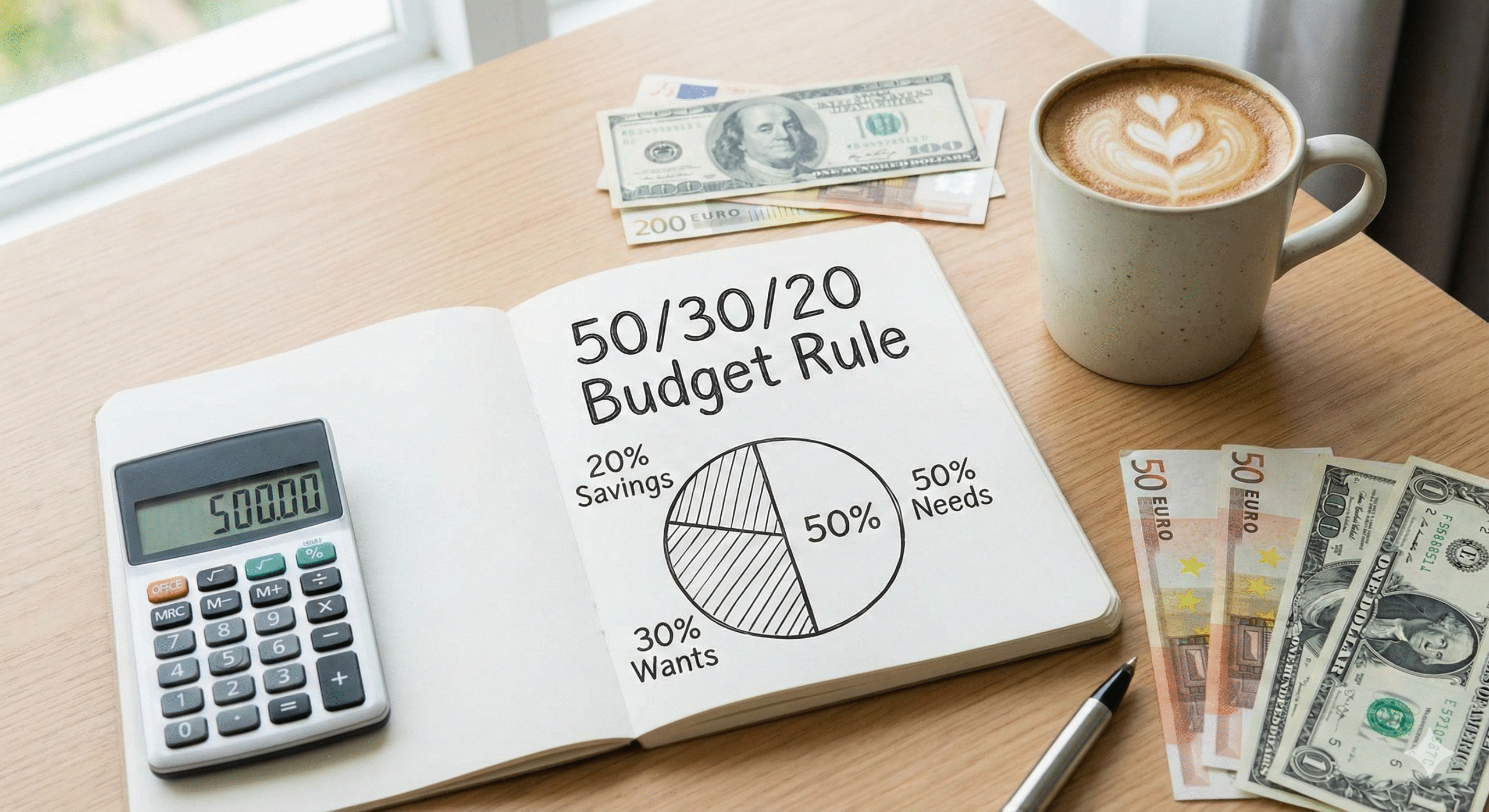
The 50/30/20 budget rule is one of the most popular budgeting methods because of its beautiful simplicity. Instead of tracking every single penny (exhausting!), you divide your after-tax income into just three categories using these budget percentages:
- 50% for Needs – Your absolute essentials and must-have expenses
- 30% for Wants – The fun stuff that brings you joy
- 20% for Savings – Building your financial future

This approach was popularized by Senator Elizabeth Warren (who was a bankruptcy expert before her political career!) in her book “All Your Worth: The Ultimate Lifetime Money Plan.” The genius of this personal budget framework is that it provides structure without being suffocating.
For anyone just learning how to budget money, these simple budget percentages make the whole process so much less intimidating. You don’t need fancy software or a finance degree – just basic math and a willingness to take control!
Quick Tip for Budgeting Beginners: The beauty of this rule lies in its flexibility. It gives you a framework without making you feel deprived – and that’s exactly why it works when other budgeting methods fail!
Breaking Down the 50/30/20 Rule: A Deep Dive
1. 50% for Needs – Your Non-Negotiable Expenses
When creating your personal budget, half of your take-home pay should cover the expenses you absolutely cannot live without. These are the bills that would seriously impact your life and well-being if you didn’t pay them.
What exactly counts as “needs” in your budget?
- 🏠 Housing – Rent or mortgage payments (including property taxes)
- 🍎 Groceries – Basic food and household essentials (not fancy restaurants!)
- 💡 Utilities – Electricity, water, gas, heating, basic internet
- 🚗 Transportation – Car payments, insurance, fuel, public transit passes
- 🏥 Healthcare – Insurance premiums, necessary medications, essential medical care
- 💳 Minimum debt payments – Credit card minimums, loan payments
- 👶 Childcare – Daycare, school expenses if you have little ones
- 📱 Basic phone plan – A simple plan, not the unlimited everything package!

Here’s a little reality check, sweetie: If your needs are eating up more than 50% of your income, it’s time to get creative. For those just starting with budgeting for beginners, this is often the biggest challenge. Maybe it means finding a roommate, negotiating your rent, switching to a cheaper phone plan, or refinancing a high-interest loan.
The key to mastering how to budget money effectively is being brutally honest about what’s a need versus what’s a want disguised as a need. That $200 cable package? Want. The gym membership you never use? Want. Basic internet for work? Need.
2. 30% for Wants – Because You Absolutely Deserve Some Joy!
This is the category that makes the 50/30/20 budget rule actually sustainable! Your “wants” are the things that add sparkle to your life but aren’t strictly necessary for survival. And girl, we all need a little sparkle!
What falls into the “wants” category of your personal budget?
- 🍽️ Dining out – Restaurant meals, takeout, brunch with the girls, that daily latte
- 🛍️ Shopping – New clothes, accessories, home décor, that gorgeous throw pillow
- 🎬 Entertainment – Movies, concerts, streaming subscriptions, event tickets
- ✈️ Travel – Vacations, weekend getaways, that girls’ trip you’ve been planning
- 💅 Self-care – Spa days, manicures, hair appointments, massage therapy
- 🏋️ Fitness extras – Premium gym memberships, personal training, boutique classes
- 📱 Upgrades – The latest smartphone, gadgets, premium app subscriptions
- 🎁 Hobbies – Art supplies, books, craft materials, sports equipment
- 🍷 Social activities – Happy hours, parties, hosting friends
I know what you’re thinking – “Only 30% for fun?!” But here’s the thing, love: when you know exactly how much you have to spend on enjoyable things, you actually savor it more! No more guilt about treating yourself because it’s already built into your personal budget!
This is what makes the 50/30/20 budget rule one of the best budgeting methods out there – it acknowledges that we’re human and need enjoyment in our lives. Unlike extreme budgets that cut all fun, this approach is designed for real life!
Pro Tip: Wants vs. needs can be tricky! Sure, you need transportation, but you want that brand-new luxury car. You need food, but you want that $18 avocado toast at the trendy café. Being honest about this distinction is crucial for budgeting for beginners!
3. 20% for Savings – Investing in Your Future Self
This is where the real magic happens, beautiful! The 20% you set aside today is what will give you peace of mind, security, and eventually – financial freedom.

Where should this 20% go in your personal budget?
- 🏦 Emergency fund – Your #1 priority! Aim for 3-6 months of living expenses
- 📈 Retirement accounts – 401(k), IRA, Roth IRA, pension contributions
- 💰 Investment accounts – Stocks, bonds, mutual funds, index funds, ETFs
- 🎓 Extra debt payoff – Payments beyond minimums (this counts as saving!)
- 🏠 Big goal savings – House down payment, wedding fund, dream vacation
- 👶 Future planning – Kids’ education funds, family planning
I cannot stress this enough – paying yourself first is the golden rule of how to budget money successfully! Set up automatic transfers to your savings account right when your paycheck hits. Honestly, you won’t miss what you don’t see sitting in your checking account!
Free Budget Calculator – Do the Math Right Now!
Ready to see exactly how to budget money using the 50/30/20 budget rule? Use this embedded calculator to figure out your ideal budget percentages:
Quick Manual Calculation: If you prefer doing it yourself, here’s a simple table for different income levels:
| Monthly Income | Needs (50%) | Wants (30%) | Savings (20%) |
|---|---|---|---|
| $3,000 | $1,500 | $900 | $600 |
| $4,000 | $2,000 | $1,200 | $800 |
| $5,000 | $2,500 | $1,500 | $1,000 |
| $6,000 | $3,000 | $1,800 | $1,200 |
| $8,000 | $4,000 | $2,400 | $1,600 |
Step-by-Step Guide: How to Budget Money with the 50/30/20 Rule
Ready to implement this budgeting method? Here’s your complete roadmap for budgeting for beginners:
Step 1: Calculate Your After-Tax Income
Take your monthly take-home pay after taxes and deductions. This is the number we’re working with – not your gross salary! If you’re a freelancer or have irregular income, calculate an average of the last 3-6 months.
Step 2: Apply the Budget Percentages
Multiply your take-home pay by 0.50, 0.30, and 0.20. Now you know exactly how much goes into each category of your personal budget.
Step 3: Track Your Current Spending
For at least one month, track every single expense. Use a budgeting app or a simple spreadsheet. Categorize each expense as a need, want, or savings contribution. This is crucial for anyone learning how to budget money!
Step 4: Analyze and Compare
Compare your actual spending to the 50/30/20 targets. Most people are surprised (and not in a good way!) to see where their money actually goes.
Step 5: Make Adjustments
If you’re overspending in one area, look for places to cut back. Can you reduce your wants spending? Find cheaper alternatives for needs? The goal is to get as close to those budget percentages as possible.
Step 6: Automate Everything
Set up automatic payments for bills and automatic transfers to savings. This is the secret sauce of successful budgeting methods – automation removes temptation!

Benefits of the 50/30/20 Budget Rule
Why has this simple budgeting method helped millions achieve financial freedom? Here’s what makes it so effective:
- Perfect for Budgeting for Beginners – No complex calculations or confusing categories
- Flexible Budget Percentages – Adapts to your unique lifestyle and income level
- Life Balance – You’re never depriving yourself completely
- Reduced Financial Stress – Knowing where your money goes brings incredible peace of mind
- Faster Goal Achievement – Consistent savings help you reach big dreams faster
- Systematic Debt Reduction – The structured approach tackles debt effectively
- Easy to Maintain – Unlike complex budgeting methods, this one sticks!
- Builds Wealth Over Time – That 20% compounds into serious money over years
When to Adjust Your Budget Percentages
Let’s keep it real, honey – the 50/30/20 budget rule isn’t always one-size-fits-all. Here are situations where you might need to tweak those budget percentages:
If You Live in an Expensive City
In places like New York, San Francisco, London, or Sydney, housing alone might eat up 40%+ of your income. Consider adjusting to 60/20/20 temporarily while you look for ways to reduce housing costs.
If You’re Paying Off Debt Aggressively
Want to crush that credit card debt faster? Try 50/20/30 – flip the wants and savings! Put that extra 10% toward becoming debt-free.
If You’re a High Earner
Making six figures? Consider saving more! A 50/20/30 (with 30% to savings) or even 40/20/40 could seriously accelerate your wealth-building journey.
If You’re Just Starting Your Career
Entry-level salary in an expensive area? For those new to budgeting for beginners, don’t stress if you can’t hit these exact numbers. Start where you are and work toward the ideal percentages over time. Even 10% savings is a great start!
Common Budgeting Mistakes to Avoid
After helping countless friends learn how to budget money, I’ve seen these pitfalls over and over:
- ❌ Confusing needs and wants – Be brutally honest about what’s truly essential
- ❌ Forgetting irregular expenses – Annual subscriptions, car maintenance, holiday gifts – build these into your personal budget!
- ❌ Not tracking spending – You can’t improve what you don’t measure
- ❌ Being too rigid – Life happens! Some months will be off, and that’s perfectly okay
- ❌ Giving up too soon – Most budgeting methods take 2-3 months to feel natural
- ❌ Not adjusting for life changes – New job, baby, move? Revisit your budget!
- ❌ Ignoring small expenses – Those $5 purchases add up faster than you think!
Best Tools for Your Personal Budget
Because we love making life easier, here are amazing tools to help with your budgeting for beginners journey:
- 📱 Mint – Free app that automatically categorizes your spending
- 📊 YNAB (You Need a Budget) – Perfect for hands-on budgeters who want control
- 💳 Personal Capital – Excellent if you want to track investments too
- 🏦 Goodbudget – Digital envelope system based on the 50/30/20 budget rule
- 📝 Google Sheets/Excel – For those who love complete customization
- ✏️ Budget journals – Sometimes old-school pen and paper just hits different!
- 📈 Empower (formerly Personal Capital) – Great for retirement planning
Comparing Budgeting Methods: Why 50/30/20 Wins
There are many budgeting methods out there. Here’s how the 50/30/20 budget rule compares:
| Method | Complexity | Best For |
|---|---|---|
| 50/30/20 Rule | Low | Beginners, balanced lifestyle |
| Envelope System | Medium | Cash-based budgeters |
| Zero-Based Budget | High | Detail-oriented planners |
| Pay Yourself First | Low | Savings-focused individuals |
Final Thoughts: Your Journey to Financial Freedom Starts Today

Listen, I know talking about money can feel uncomfortable or even scary, but here’s the absolute truth: taking control of your finances is one of the most empowering things you can do for yourself.
The 50/30/20 budget rule isn’t about restriction or deprivation – it’s about freedom. Freedom from money stress, freedom to enjoy life guilt-free, and freedom to build the future you’ve always dreamed of having.
Whether you’re just starting your budgeting for beginners journey or you’ve tried other budgeting methods that didn’t stick, this approach offers the perfect balance of structure and flexibility. Those simple budget percentages can truly transform your financial life.
Start where you are, even if it’s imperfect. Use the free calculators above to crunch your numbers. Every single step toward better financial habits is a step toward the life you deserve.
Remember, learning how to budget money is a skill – and like any skill, it gets easier with practice. Your personal budget is a living document that grows and changes with you.
You’ve absolutely got this, beautiful! Your future self is already thanking you. 💪✨
Frequently Asked Questions About the 50/30/20 Budget Rule
Is the 50/30/20 budget rule good for beginners?
Absolutely! The 50/30/20 budget rule is one of the best budgeting methods for beginners because of its simplicity. With just three categories and straightforward budget percentages, anyone can start managing their money effectively.
What if I can’t save 20% right now?
Start with whatever you can manage – even 5% is a fantastic beginning! The goal of budgeting for beginners is to build the habit first, then gradually increase your savings rate over time. Something is always better than nothing.
Should I use gross income or net income for my budget?
Always use your net income (take-home pay after taxes and deductions) when learning how to budget money. This gives you a realistic picture of what you actually have to work with each month.
How do I handle irregular or variable income?
Calculate an average of your income over 3-6 months and base your personal budget on that. In higher-earning months, save the extra; in lower months, focus on covering needs first.
Can I change the budget percentages to fit my situation?
Yes! The budget percentages are guidelines, not rigid rules. If you’re aggressively paying off debt, you might try 50/20/30. High earners might prefer 40/20/40. Customize it to work for your life!
What’s the difference between the 50/30/20 rule and other budgeting methods?
Unlike complex budgeting methods like zero-based budgeting that require tracking every penny, the 50/30/20 budget rule uses simple percentages across three broad categories. This makes it more sustainable and less overwhelming for most people.
Did you find this guide to the 50/30/20 budget rule helpful? Share this article with a friend who’s ready to transform their finances! Drop a comment below – I’d absolutely love to hear about your budgeting for beginners journey! 💕
About the Author







1 thought on “50/30/20 Budget Rule Explained: The Simple Formula to Financial Freedom”