When you’re barely making ends meet, the idea of paying off debt can feel completely impossible. But here’s what I want you to know: it’s not. Thousands of people have found their way to financial freedom on modest incomes, and you can too.
Image: Taking the first steps toward debt freedom
Let’s be real for a moment: trying to get out of debt on low income feels like climbing a mountain with weights on your ankles. When your paycheck barely covers rent and groceries, where is the extra money supposed to come from?
I get it. I’ve been there – living paycheck to paycheck, watching interest pile up, feeling like the debt would never end. But here’s what I learned: becoming debt free low salary isn’t about having more money. It’s about using the money you have differently.
In this guide, I’m sharing 15 practical steps for debt payoff low income that actually work in the real world – not theoretical advice from people who’ve never struggled. These strategies helped me, and they’ve helped countless others achieve financial freedom low income situations and all.
Let’s get started on your journey to becoming debt-free.
Table of Contents
Why Getting Out of Debt on Low Income Is Different (But Not Impossible)
Most debt advice assumes you have extra money to throw at your balances. But when you’re trying to pay off debt broke or on a tight budget, that advice falls flat.
The truth is, debt payoff low income requires a different approach:
- 📌 Every dollar matters – there’s no room for waste
- 📌 Increasing income is just as important as cutting expenses
- 📌 You need strategies, not just motivation
- 📌 Progress will be slower, so you need to stay committed
- 📌 Free resources and debt help programs exist – use them!
The good news? Being forced to be strategic often makes the lessons stick. Many people who achieve financial freedom low income never return to debt because they’ve built unshakeable money habits.
Remember: Your income doesn’t define your worth OR your ability to become debt-free. Plenty of high earners are drowning in debt while people making minimum wage have achieved complete financial freedom. It’s about the decisions, not the dollars.
15 Practical Steps to Get Out of Debt on Low Income
Step 1: Face Your Debt Reality
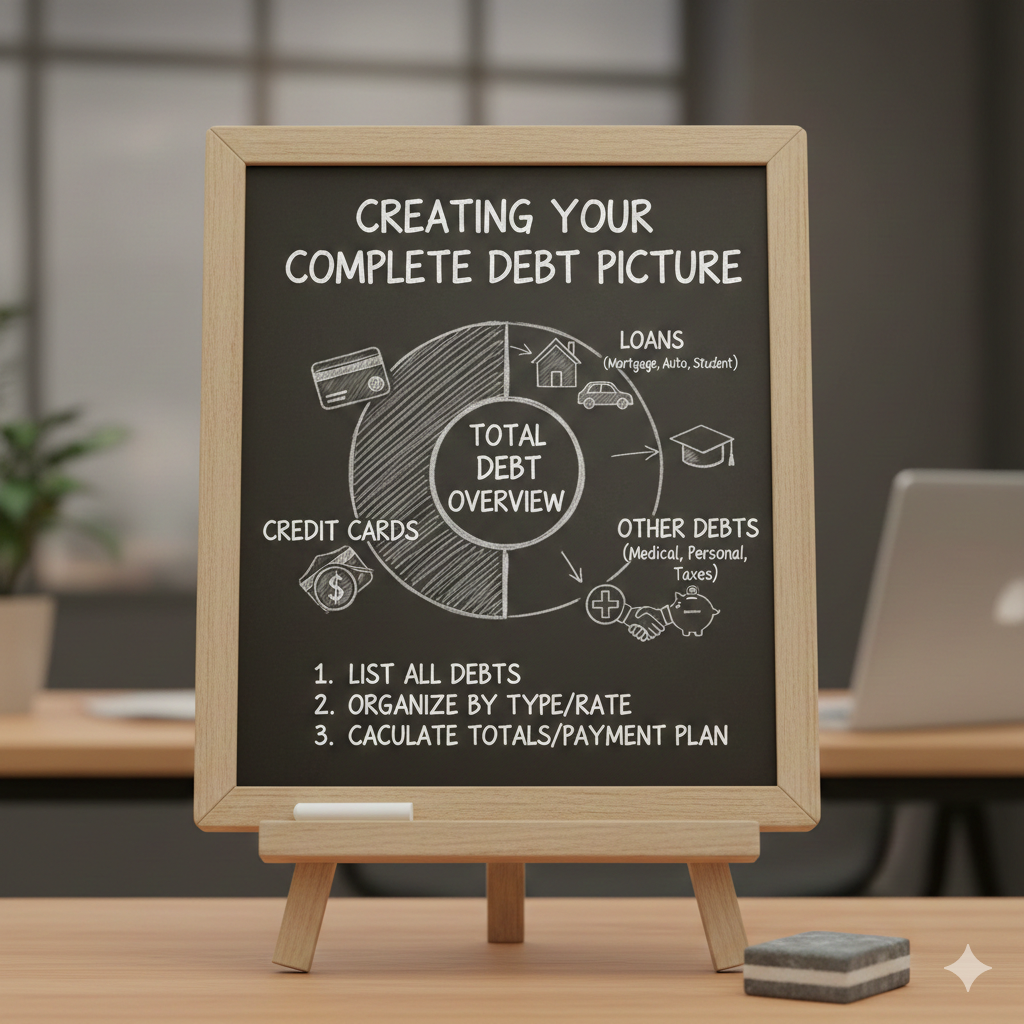
The first step to get out of debt on low income is knowing exactly what you’re dealing with. I know it’s scary, but you need the full picture.
Create a complete debt inventory:
- List every single debt you owe
- Write down the total balance, interest rate, and minimum payment for each
- Calculate your total debt amount
- Note which debts are past due or in collections
This exercise might feel awful, but it’s also liberating. Once you see the number, you can make a real plan to tackle it.

Image: Creating your complete debt picture
Step 2: Build a Bare-Bones Budget
When trying to pay off debt broke, a regular budget won’t cut it. You need a bare-bones budget that covers only absolute necessities.
Essentials only:
- 🏠 Housing (rent/mortgage)
- 💡 Basic utilities
- 🍎 Groceries (not dining out)
- 🚗 Transportation to work
- 💊 Essential medications
- 📱 Basic phone plan
Everything else – streaming services, subscriptions, coffee shops, new clothes – gets cut temporarily. I know it’s hard, but this is survival mode until you get traction on your debt.
Related: NerdWallet: How to Make a Budget
Step 3: Find Every Dollar You’re Wasting
Even on a low income, money leaks exist. Finding them is crucial for debt payoff low income success.
Common money leaks on tight budgets:
- 💳 Bank fees – Switch to a no-fee account
- 📱 Phone plan – Do you need unlimited data you barely use?
- ⚡ Energy waste – Small changes reduce utility bills
- 🛒 Impulse purchases – Even small ones add up
- 🏧 ATM fees – Plan cash withdrawals better
- 📦 Forgotten subscriptions – Check your statements!
Track every penny for one month. You’ll likely find $50-200 in monthly savings you didn’t know existed.
Step 4: Negotiate Lower Interest Rates
Here’s a debt help strategy most people skip: simply ask for lower rates. It works more often than you’d think!
How to negotiate:
- Call your credit card company’s customer service
- Mention you’ve been a good customer and want to stay
- Request a lower interest rate
- If they say no, ask to speak with a supervisor
- Try again in 3-6 months if unsuccessful
I’ve seen people get 5-10% knocked off their interest rates with one phone call. On a $5,000 balance, that’s hundreds in savings!
Step 5: Explore Debt Help Programs
When you’re trying to get out of debt on low income, don’t ignore free or low-cost debt help resources.

Image: Don’t be afraid to seek help
Free resources to explore:
- 🏛️ Non-profit credit counseling – NFCC-approved agencies offer free advice
- 📋 Debt management plans – May reduce interest rates and consolidate payments
- 💰 Government assistance – Food stamps, utility assistance free up cash
- 🎓 Student loan forgiveness – Check if you qualify for PSLF or income-based plans
- ⛪ Community resources – Churches, charities, and local organizations
- 📞 211 helpline – Dial 211 for local assistance programs
Taking advantage of assistance programs when you need them isn’t shameful – it’s smart. These programs exist specifically for situations like yours.
Related: National Foundation for Credit Counseling (NFCC) – Find Free Help
Step 6: Start With a Tiny Emergency Fund
This might seem counterintuitive when you want to pay off debt broke, but hear me out: without even a small emergency fund, one unexpected expense puts you right back into debt.
Your starter emergency fund goal: $500-1,000
This isn’t meant to cover everything – just enough to handle minor car repairs, medical co-pays, or surprise expenses without reaching for a credit card.
Save this FIRST, before aggressively attacking debt. It protects your progress and prevents that discouraging “two steps forward, one step back” feeling.
Step 7: Use the Debt Snowball Method
For debt free low salary situations, I recommend the debt snowball method. Quick wins are crucial when the journey feels overwhelming.
How it works:
- List debts from smallest to largest balance
- Pay minimums on everything
- Throw every extra penny at the smallest debt
- Once it’s gone, roll that payment to the next smallest
- Celebrate each debt you eliminate!
When you’re on a low income, those early victories keep you going. Paying off that first $300 credit card is proof that you CAN do this.
Step 8: Find Ways to Increase Your Income
The fastest way to get out of debt on low income is to make your income less low. Even small increases make a huge difference.

Image: Side income accelerates debt payoff
Low-barrier income ideas:
- 🚗 Delivery driving – DoorDash, Instacart, Amazon Flex
- 🐕 Pet sitting/dog walking – Rover, Wag, local clients
- 🧹 Cleaning services – Houses, offices, move-out cleaning
- 📦 Selling items – Facebook Marketplace, eBay, Poshmark
- 💻 Online tasks – Amazon Mechanical Turk, transcription, surveys
- 🌙 Second part-time job – Retail, restaurants, seasonal work
- 👶 Babysitting – Especially weekends and evenings
Even an extra $200-400 per month from a side hustle can cut your debt-free timeline in half!
Step 9: Sell What You Don’t Need
Look around your home. That stuff collecting dust could accelerate your debt payoff low income progress.
Things that sell well:
- Electronics (old phones, tablets, gaming systems)
- Clothing and shoes (especially brand names)
- Furniture you don’t use
- Kitchen appliances and gadgets
- Exercise equipment
- Kids’ toys, clothes, and gear (they outgrow fast!)
- Books, DVDs, and media
A weekend of decluttering and listing items online could generate $500-2,000 for a serious debt payment. Plus, your living space gets cleaner!
Step 10: Cut Food Costs Dramatically
Food is often the biggest flexible expense in any budget. Mastering this area is essential when trying to pay off debt broke.
Ways to slash food spending:
- 🍳 Meal plan religiously – Plan every meal before shopping
- 📋 Use a grocery list – And stick to it!
- 🏷️ Shop sales – Plan meals around what’s on discount
- 🥫 Buy store brands – Usually identical to name brands
- 🍲 Cook in batches – Make large portions and freeze
- ☕ Quit coffee shops – Brew at home
- 🍱 Pack all lunches – Never buy lunch at work
- 🥛 Use food banks if needed – No shame in getting help
A family of four can eat healthy on $400/month with strategic planning. That’s often $200-400 less than typical spending!
Step 11: Reduce Housing Costs If Possible
Housing is usually the biggest expense. Any reduction here massively impacts your ability to get out of debt on low income.

Image: Housing changes can make a big impact
Options to consider:
- 🏠 Get a roommate – Split rent and utilities
- 📍 Move to cheaper area – If feasible for work
- 🔑 Negotiate rent – Landlords sometimes prefer stable tenants at lower rent
- 🏡 Downsize – Do you need that extra bedroom?
- 👨👩👧 Temporarily live with family – Pride-swallowing but effective
- 🏢 Rent out a room – If you have space
I know these aren’t easy changes. But saving $200-500 per month on housing could mean becoming debt-free years faster.
Step 12: Stop All New Debt Immediately
You can’t fill a bucket with holes in it. The same applies to your debt free low salary journey – you must stop adding new debt.
Strategies that work:
- ✂️ Cut up credit cards (or freeze them in ice)
- 🚫 Delete saved payment info from websites
- 💵 Switch to cash-only for discretionary spending
- 📵 Unsubscribe from retailer emails
- 🛑 Practice the 48-hour rule before any purchase
Every time you’re tempted to add debt, remind yourself: “This will keep me trapped longer.”
Step 13: Find Free Entertainment and Social Options
Just because you’re trying to achieve financial freedom low income doesn’t mean you can’t have a life!
Free and low-cost alternatives:
- 📚 Library – Free books, movies, events, even museum passes!
- 🌳 Parks and hiking trails
- 🎬 Free community events and festivals
- 🏋️ YouTube workouts instead of gym memberships
- 🎮 Game nights at home with friends
- 🍳 Potlucks instead of restaurant dinners
You need stress relief and connection to sustain this journey. Find ways to enjoy life that don’t cost money.
Step 14: Stay Motivated for the Long Haul
Debt payoff low income is a marathon, not a sprint. You need strategies to stay committed.

Image: Celebrate every step forward!
Motivation strategies:
- 📊 Track progress visually – Use a chart or app to see debt decreasing
- 🎯 Set small milestones – Celebrate every $500 paid off
- 📝 Write down your “why” – Read it when tempted to quit
- 👥 Find accountability – Friend, online community, or family member
- 📖 Read success stories – Others on low incomes have done this!
- 🏆 Reward yourself cheaply – A movie night at home when you hit goals
On the hard days, remember: every dollar paid is one step closer to freedom.
Step 15: Never Give Up – Adjust and Keep Going
Here’s the truth about trying to get out of debt on low income: there will be setbacks. The car will break down. An unexpected bill will hit. Life happens.
When setbacks occur:
- Don’t panic or give up
- Handle the emergency
- Adjust your plan if needed
- Get right back on track
- Remember: slow progress is still progress
The only way to truly fail is to quit entirely. As long as you keep moving forward – even slowly – you WILL get there.
A Realistic Timeline for Debt Freedom on Low Income
Let’s be honest about expectations. Achieving financial freedom low income takes longer, but it’s absolutely achievable.
| Total Debt | Extra Monthly Payment | Approximate Timeline |
|---|---|---|
| $5,000 | $100 | 4-5 years |
| $5,000 | $200 | 2-2.5 years |
| $10,000 | $150 | 5-6 years |
| $10,000 | $300 | 3-3.5 years |
| $20,000 | $200 | 8-10 years |
| $20,000 | $400 | 4-5 years |
Notice how even small increases in payment amount dramatically shorten the timeline? That’s why finding extra income is so powerful!
Frequently Asked Questions
Is it really possible to get out of debt on low income?
Absolutely. Thousands of people have achieved debt free low salary living. It takes longer and requires more creativity, but it’s 100% possible with commitment and strategy.
Should I save money or pay off debt first?
Start with a small emergency fund ($500-1000), then attack debt aggressively. This prevents new debt from unexpected expenses.
What if I literally have no extra money?
Focus first on finding ways to increase income (side gigs, selling items) or accessing debt help programs. Even $25 extra per month is a start.
Should I try debt consolidation or settlement?
Consolidation can help if you get a lower interest rate. Settlement is risky and damages credit – only consider as a last resort. Try non-profit credit counseling first.
How do I stay motivated when progress is slow?
Celebrate small wins, track progress visually, and connect with others on the same journey. Slow progress is still progress toward financial freedom low income.
Final Thoughts: Your Debt Free Journey Starts Now
I won’t pretend that learning to get out of debt on low income is easy. It’s not. It requires sacrifice, creativity, and a stubborn refusal to give up. But it is absolutely, completely, 100% possible.
Here’s what I want you to remember:
- ✅ Your income doesn’t determine your outcome
- ✅ Every dollar you pay toward debt is a victory
- ✅ Debt help resources exist – use them without shame
- ✅ Increasing income is just as important as cutting expenses
- ✅ Setbacks are normal – they don’t mean failure
- ✅ Slow progress is still progress
The day you make your last debt payment will be one of the best days of your life. All those small sacrifices, creative solutions, and difficult choices will be worth it. You’ll have proven that financial freedom low income is not just possible – it’s something YOU achieved.
Now go take that first step. Face your debt numbers. Make a plan. And start your journey today.
You’ve got this. I believe in you. 💪✨
Are you working to get out of debt on low income? Share your story or questions in the comments below! And if this guide helped you, pass it along to someone else who needs to hear that debt payoff low income is absolutely possible!
About the Author